 Blog •
24/04/26
Fashion education has always had a difficult job.
It has to nurture creativity, develop technical understanding, prepare students for industry, respond to cultural change, and somehow make room for new tools, new workflows and new expectations as the industry continues to shift.
That is not a small ask.
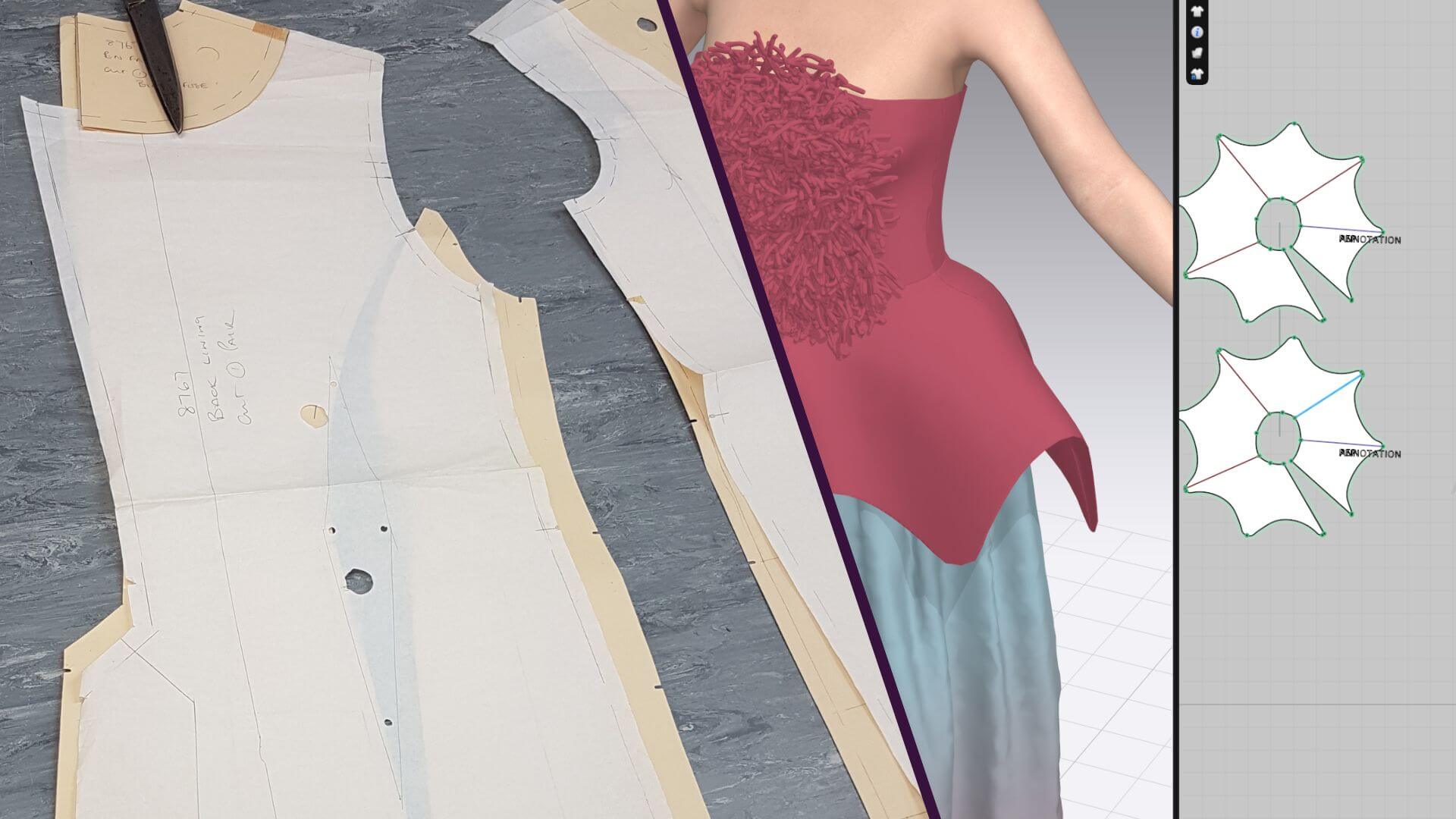
But as digital product development, 3D workflows and AI continue to reshape how fashion products are designed, developed, fitted, marketed and sold, I think we need a more honest conversation about whether students are being equipped with the right mix of creative, technical, digital and role-specific skills.
This is not a new concern for me.
Back in 2019, as part of my MA research, I investigated the skills gap between fashion education and the fashion industry. At the time, my research found a clear concern around the underrepresentation of technical and product development skills within fashion education. This included areas such as garment technology, grading, sizing, the human body, fabrics, fibres and materials, all of which are fundamental to many roles across the fashion industry.
That concern has stayed with me ever since.
Now, with the continued rise of technologies such as 3D fashion software, digital product creation and AI, I do not believe the gap is getting smaller. In many cases, I think it is widening.
When people talk about the future of fashion, the conversation often jumps straight to technology.
▪️3D design.
▪️AI.
▪️Digital twins.
▪️Virtual samples.
▪️Automated workflows.
▪️Digital product passports.
▪️PLM systems.
▪️On-demand production.
These tools matter, and they are changing the way products move through the fashion value chain. McKinsey has previously reported that generative AI has the potential to help fashion businesses become more productive, get to market faster and serve customers better. The World Economic Forum also expects 39% of workers’ key skills to change by 2030, showing that this is not just a fashion issue, but a wider workforce issue.
But in fashion, the risk is that we focus too much on the tool and not enough on the foundations needed to use it well.
A student can learn how to navigate a 3D software interface, but that does not automatically mean they understand fit.
They can generate a digital garment, but that does not mean they understand fabric behaviour.
They can use AI to support ideation, but that does not mean they understand product viability, costing, construction, sizing, production or the customer.
That is where I think the conversation needs to become more grounded.
The future of fashion education is not about replacing traditional skills with digital ones. It is about understanding how the two now need to work together.
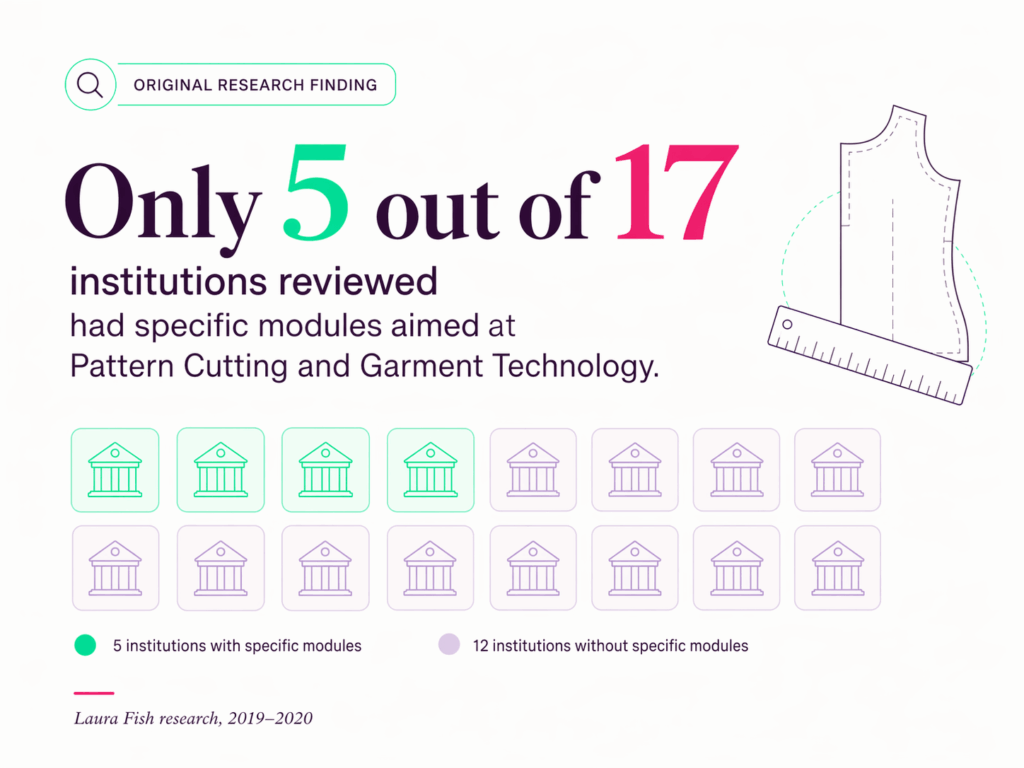
In my research, I compared the skills taught within a selection of undergraduate fashion courses against the skills required by industry roles. The aim was to understand whether fashion education was preparing students for the breadth of skills expected in real working environments.
The findings suggested that technical skills were underrepresented in comparison with more design-led areas. In one part of the research, only 5 of the 17 universities and colleges reviewed had specific modules aimed towards pattern cutting, and the same number had specific modules for garment technology.
That matters because these are not niche skills.
They sit at the centre of product development.
They affect how a garment fits, how it is made, how it is graded, how it performs, how it is costed and how clearly it can be communicated to suppliers.
My research also identified that the skills gap was particularly evident within the technical skills sector, including garment technology, grading, sizing, the human body, fabrics, fibres and materials.
These are the areas that often sit behind the scenes, but they are also the areas that hold a product together.
One of the biggest misconceptions I see around 3D fashion technology is the idea that it reduces the need for technical skill.
In my experience, the opposite is true.
To use 3D software effectively, especially in a product development or fit context, you need a strong understanding of the garment itself.
▪️You need to know how a pattern works.
▪️You need to understand balance, ease, tension and proportion.
▪️You need to understand fabric behaviour.
▪️You need to know what is realistic in production.
▪️You need to understand what decisions can be made digitally and what still needs physical validation.
In my post-pandemic research, I looked at the acceleration of digital transformation and how fashion education would need to respond. That report highlighted the growing requirement for digital design solutions, but also the gap between creative and technical knowledge, especially as design and pattern-making have historically been treated as separate areas.
This is exactly where 3D workflows become interesting.
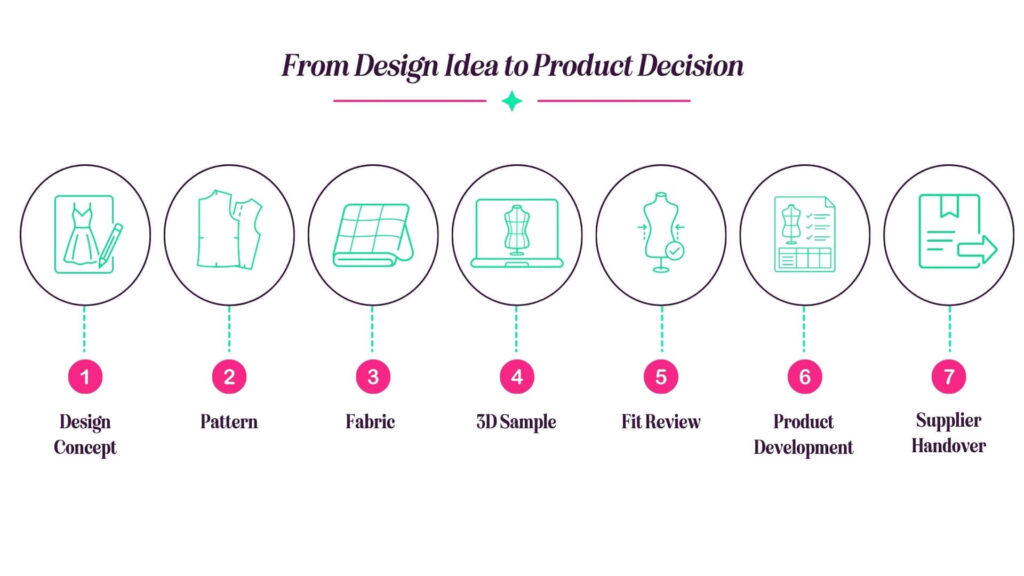
They sit between design, pattern, fit, fabric, product development, communication and production.
That makes them incredibly powerful, but also difficult to teach well if learners do not have enough understanding of the connected process.
AI is now accelerating the need to rethink skills even further.
Fashion brands are already using AI for trend analysis, customer search, visual content, product recommendations, design ideation and operational efficiencies. Reuters reported in 2025 that Zalando was using AI to reduce marketing image production times from six to eight weeks down to three to four days, with significant cost reductions.
That is a huge shift.
But again, this does not remove the need for human expertise.
It changes where that expertise is needed.
If AI can generate options quickly, students and professionals need to become better at questioning, editing, validating and contextualising those outputs.
In fashion, that means asking:
▪️Is this garment technically possible?
▪️Does it make sense for the customer?
▪️Could it be manufactured at the right price point?
▪️Does the fabric choice support the silhouette?
▪️Is the fit realistic?
▪️Does the digital output communicate enough information for the next person in the workflow?
These are not software questions. They are fashion product development questions.
And they require a blend of creative, technical, commercial and critical thinking.
I want to be clear here. I do not think this is as simple as saying fashion education is failing.
Having taught in colleges, universities and professional training environments myself, I know how much work goes into delivering a course. I also know that educators are often working within tight structures.
▪️Curriculums have to meet validation requirements.
▪️Modules have learning outcomes.
▪️Assessment structures have to be followed.
▪️Resources and software licences cost money.
▪️Timetables are limited.
▪️Students arrive with different levels of confidence and experience.
It is easy for people outside education to say, “Why don’t they just add 3D?” or “Why isn’t AI already embedded?” But curriculum change is rarely that simple.
Something usually has to move to make space.
That is why I think the conversation should not only be about what needs to be added. It should also be about what needs to be rebalanced.
▪️Are students spending enough time understanding how garments are actually developed?
▪️Are they learning how different industry roles connect?
▪️Are they being introduced to technical career pathways early enough?
▪️Are digital tools being taught as part of workflow, rather than as standalone software skills?
▪️Are industry partners helping educators define what is now essential?
These are the questions I think we should be asking.
One of the strongest concerns from my earlier work was not only the lack of technical skill, but also the lack of career guidance.
Many students enter fashion education with a narrow view of the industry. Often, the most visible route is fashion design. But the industry is made up of many roles that students may not fully understand when they begin their course.
▪️Pattern cutters.
▪️Garment technologists.
▪️Product developers.
▪️Digital product creators.
▪️3D technical designers.
▪️Buyers.
▪️Merchandisers.
▪️Fabric technologists.
▪️Production coordinators.
▪️Technical designers.
▪️PLM specialists.
▪️Digital asset creators.
Some of these roles are highly technical. Some are highly commercial. Some sit between creative and technical teams. Some are emerging because of digital transformation.
In my post-pandemic research, I also explored the need to support students in understanding which skills would be imperative to their future within industry.
This is still something I feel strongly about.
Not every student needs the same destination.
So why do we often structure learning as though they do?
Education cannot solve this alone.
Industry has to be part of the solution.
One of the points I made in my earlier research was that industry is not free from responsibility. While analysing job role specifications, I found that many roles did not clearly include the full skill requirement, which raises an important question: how can academics keep up with industry needs if job descriptions themselves do not always reflect the true reality of the role?
That still feels relevant now.
If industry wants graduates to arrive with stronger technical, digital and workflow awareness, then industry needs to help define what that actually means.
Not vaguely. Specifically.
▪️What should a graduate technical designer understand?
▪️What should a junior product developer be able to do?
▪️What level of digital skill is realistic for an entry-level role?
▪️Which traditional skills still matter?
▪️Which emerging skills are becoming essential?
▪️Where should education focus, and where should businesses take responsibility for continued training?
This needs to be a partnership, not a blame game.
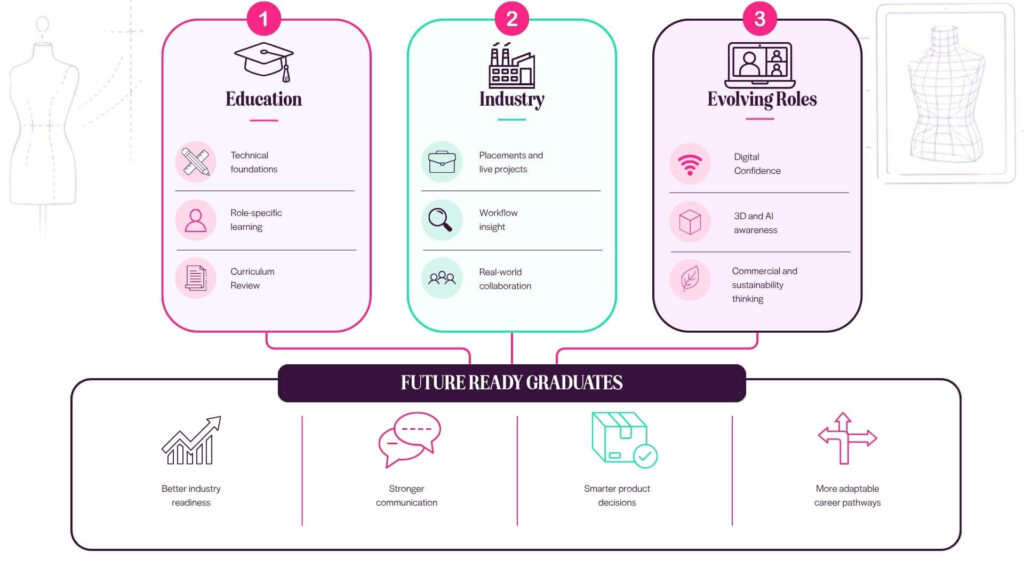
For me, the future curriculum conversation should be built around connected skills.
Not “traditional versus digital”.
Not “creative versus technical”.
Not “education versus industry”.
Instead, I think we need to ask how these areas connect.
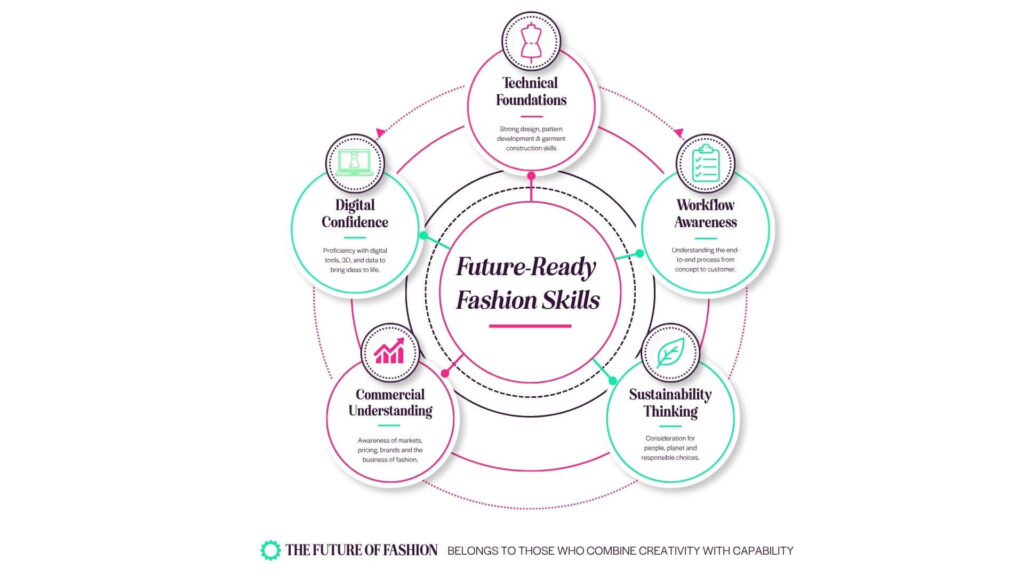
A modern fashion education framework might need to include:
Technical foundations
Pattern understanding, garment construction, fit, sizing, grading, fabrics, trims, specifications and product quality.
Digital confidence
3D product creation, digital pattern workflows, PLM awareness, digital asset management, AI literacy and visual communication.
Workflow awareness
Understanding how design, buying, product development, technical teams, suppliers and manufacturers interact.
Commercial understanding
Customer awareness, price architecture, competitor research, range building, costing and market positioning.
Sustainability and circular thinking
Material choices, waste reduction, sampling reduction, repair, reuse, traceability and responsible development.
Communication across teams
Clear technical drawings, fit comments, tech packs, digital handovers, file naming, version control and supplier communication.
This is not about expecting every student to master everything.
It is about helping them understand the landscape and then build depth in the direction most relevant to their future role.
The World Economic Forum’s Future of Jobs Report 2025 brought together insight from more than 1,000 global employers representing over 14 million workers. It highlights how technology, the green transition and labour market shifts are changing jobs and skills across industries.
In the UK fashion and textiles sector, UKFT also recently highlighted the need to strengthen the pipeline of technical skills and ensure courses reflect how the industry is evolving.
This is why I think fashion education has reached an important point.
The industry is not simply asking for graduates who can design a collection.
It increasingly needs people who can understand product, process, systems, sustainability, digital tools and collaboration.
That does not mean creativity becomes less important.
It means creativity needs to be supported by stronger foundations.
I do not think the answer is to overload students with more and more content.
Fashion education is already full.
Instead, I think the answer lies in better structure, stronger collaboration and more honest prioritisation.
We need to stop asking whether education should teach traditional skills or digital skills.
It needs both.
We need to stop assuming that every student is heading for the same role.
They are not.
We need to stop treating 3D, AI and digital workflows as optional extras.
They are becoming part of how the industry works.
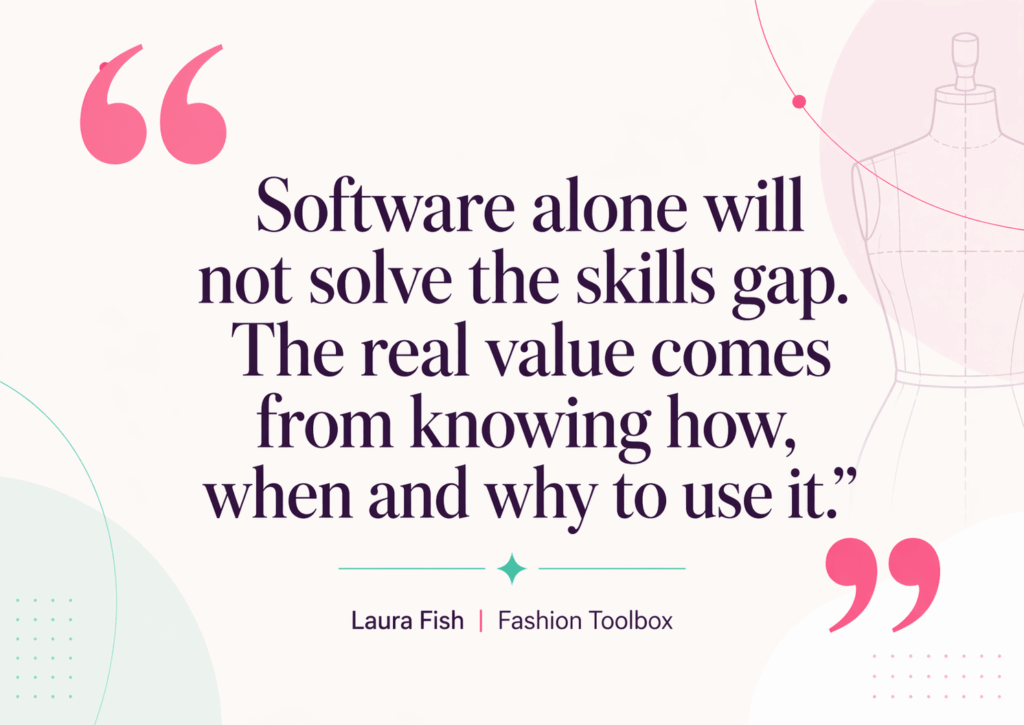
But we also need to stop pretending that software alone will solve the skills gap.
It will not.
The strongest future fashion graduates will not simply be the ones who know how to use the latest tool. They will be the ones who understand why they are using it, where it fits in the workflow, what decisions it helps support, and what technical knowledge is needed to make those decisions properly.
For me, that is the real conversation.
Fashion education does not need to abandon what it was built on.
But it does need to keep evolving.
And it cannot do that properly in isolation.
Industry, education and independent specialists need to work together to build clearer pathways, stronger technical foundations and more relevant digital learning experiences.
Because the future of fashion will not be shaped by software alone.
It will be shaped by the people who know how to use it well.
If you could change one thing in the fashion curriculum today, what would it be?



 Go Back