 Blog •
23/09/23
In September 2023, I visited REBEL: 30 Years of London Fashion at the Design Museum, an exhibition created in partnership with the British Fashion Council to celebrate three decades of NEWGEN talent.
Curated by Sarah Mower MBE and Rebecca Lewin, the exhibition brought together early work from designers who went on to shape contemporary British fashion, alongside pieces that became part of wider music and popular culture.
What stayed with me was not only the clothing itself, but how clearly the exhibition showed fashion as a space for experimentation, identity, storytelling and career development.
NEWGEN has played an important role in supporting emerging British designers, and the exhibition brought together nearly 100 looks from debut and early collections.
Seeing those pieces together was a reminder that the work we now recognise as part of British fashion history often began with designers experimenting, taking risks and developing a point of view before they had an established name.
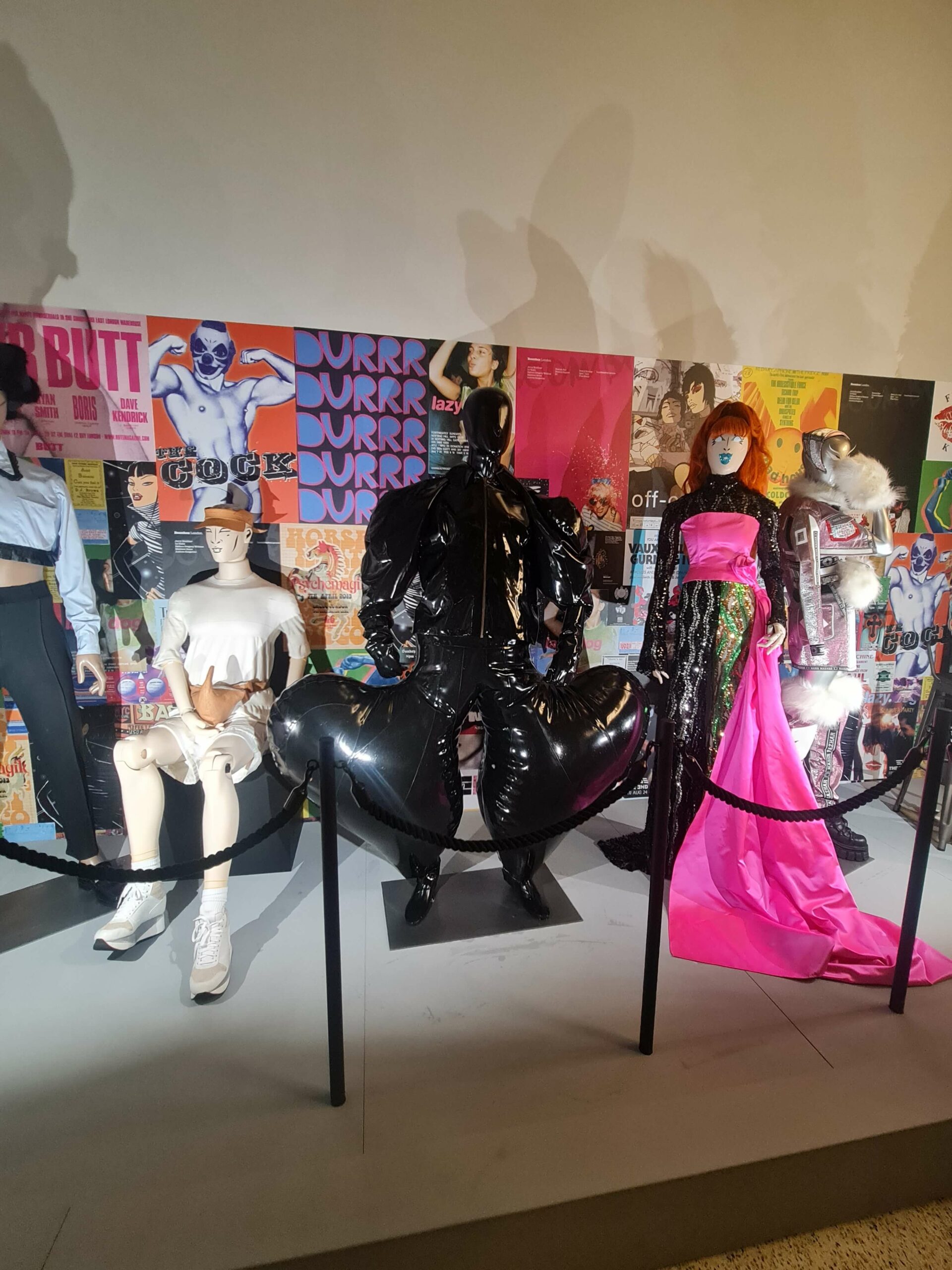
The exhibition also showed how closely fashion intersects with wider culture, from Björk’s swan dress to Harry Styles’ ‘Golden’ look and HARRI’s inflatable latex suit worn by Sam Smith at the 2023 BRIT Awards.
One of the strongest parts of the exhibition for me was revisiting the early work and career of Alexander McQueen.
His work is a reminder that fashion can communicate far more than surface aesthetics. McQueen used silhouette, construction, materials and presentation to build narratives around ideas that were often uncomfortable, political or deeply personal.
It reinforces something I often come back to when teaching digital fashion: tools such as CLO3D are most useful when they support the idea and the garment, rather than becoming the idea themselves.
Related reading: I returned to the idea of non-linear fashion careers and emerging opportunities in my talk with UKFT and Caramel Rock.
Read: Discover Your Future in Fashion & Textiles
I was also drawn to the club scene section of the exhibition, which explored the relationship between fashion, music, nightlife and identity.
This part of the exhibition felt less about fashion as a finished product and more about clothing as a way of communicating who we are, where we belong and how different communities create their own visual language.
That relationship between clothing and identity does not disappear when fashion becomes digital. If anything, virtual environments raise new questions about how people represent themselves when the physical limitations of clothing no longer apply in quite the same way.
Looking back, what I remember most about REBEL is how much of the work came from designers who were still establishing their identity and finding their place within the industry.
There is a tendency to look back at successful designers as though their careers followed an obvious route, but exhibitions like this show the experimentation, subcultures, collaborations and early opportunities that often sit behind the work we later recognise as significant.
For me, that is relevant both to emerging designers and to the way we think about new technology in fashion. Tools change, workflows change and career paths change, but strong ideas, technical understanding and the ability to develop a point of view still matter.
The exhibition has now become part of the Design Museum’s recent history, but the questions it raised around creativity, identity and how new voices are supported in fashion still feel relevant.



 Go Back