 Blog •
14/06/24
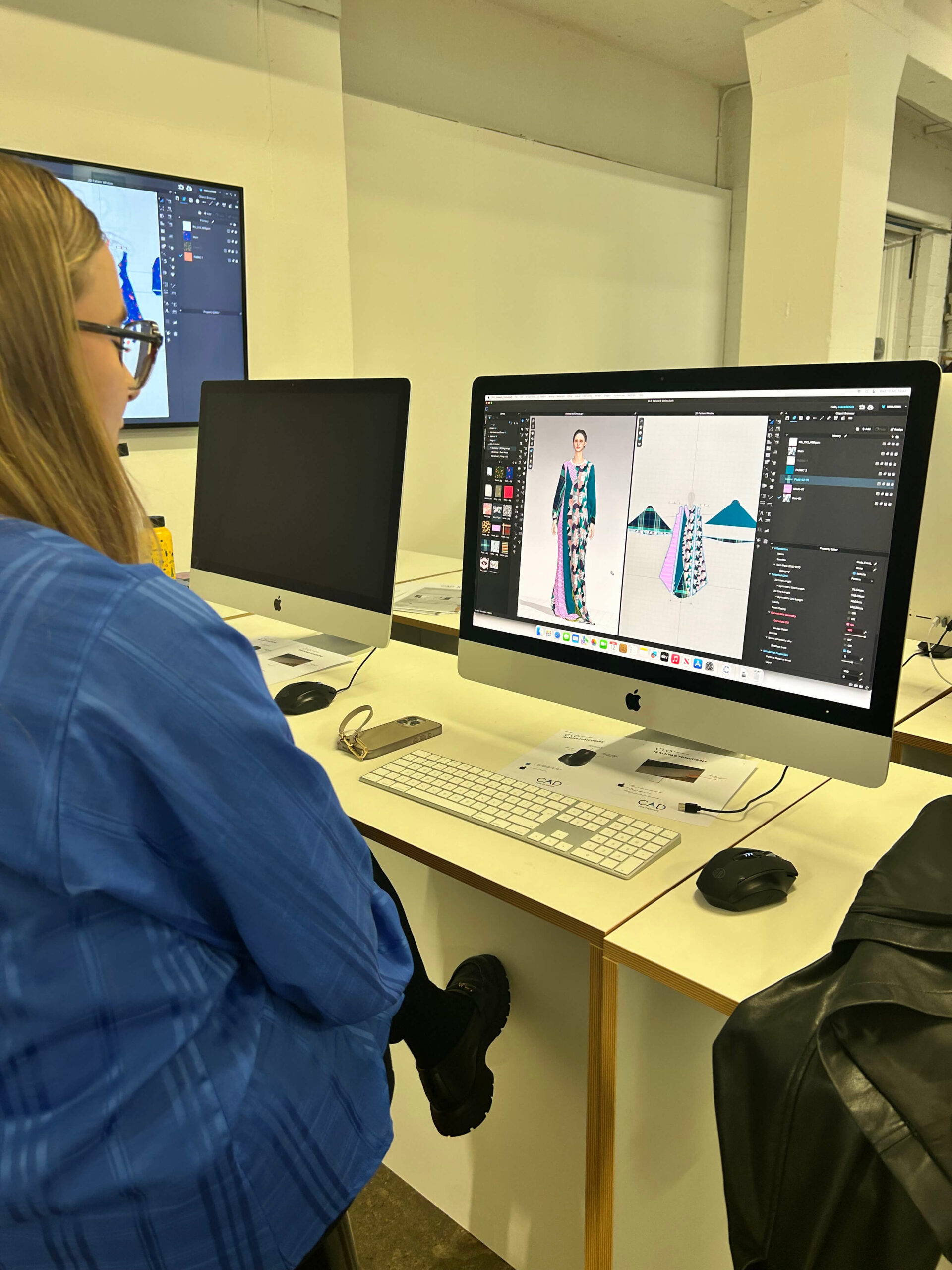
In June 2024, I delivered a series of CLO3D workshops at Graduate Fashion Week in partnership with CLO Virtual Fashion Inc. and CAD for Fashion.
Across the event, I worked with students and recent graduates at very different stages of their digital learning, from people opening CLO3D for the first time to those wanting support with fit, portfolios and existing projects.
The aim was to give learners a practical introduction to where 3D can sit within fashion design and product development, while giving them space to experiment and ask questions around their own work.
Event note: This article reflects the workshops I delivered at Graduate Fashion Week in 2024. Since then, CLO3D has continued to develop, but the learning principles behind these sessions, starting with strong foundations and applying them through practical fashion tasks, are still central to how I teach.
In this workshop, we used CLO3D to explore zero-waste pattern-cutting principles within a digital environment. Learners experimented with pattern shapes and layouts and considered how design decisions can affect fabric utilisation.
The session also opened up a wider conversation around waste, sampling and the role digital tools can play in helping designers test ideas before committing materials physically. Using 3D does not automatically make a garment sustainable, but it can give designers another way to understand the consequences of their decisions earlier.
This session was designed for complete beginners. I introduced the CLO3D workspace and guided learners through the process of creating and working with a simple digital garment.
The focus was not on covering as many tools as possible. It was about helping learners understand how the 2D pattern and 3D garment connect, and giving them enough confidence to continue experimenting after the workshop.
See a longer beginner programme in practice: I later taught an intensive CLO3D Summer School at Nottingham Trent University, where learners built their skills through a series of practical digital fashion projects.
Read: Inside NTU’s CLO3D Summer School
Fit is one of the areas where 3D can give learners useful information earlier in the development process. In this session, we looked at how the pattern, avatar and simulated garment can be used together to identify areas that may need further investigation before physical sampling.
We explored how 3D can support fit conversations and help learners understand the relationship between the 2D pattern and the garment on the body. It does not replace physical fit validation, but it can help make the development process more informed.
Alongside the scheduled workshops, I hosted drop-in sessions for portfolio feedback, CLO3D questions and general industry guidance.
These conversations were often much more individual. Some learners needed technical help, while others were trying to work out how to present digital work alongside traditional fashion skills. There is no single formula for a strong portfolio, so having time to look at the work in front of me made these sessions particularly useful.
Outside the workshops, I also attended the final runway show. What stood out was not digital replacing traditional fashion skills, but how comfortably many graduates were beginning to move between the two.
Pattern cutting, construction, illustration, styling and digital tools do not need to sit in separate camps. Increasingly, the opportunity is in understanding how they can complement one another.
Related reading: I’ve since explored this question in more depth in Is Fashion Education Keeping Pace with the Skills Industry Now Needs?, looking at how traditional, technical and digital skills can sit together within fashion education.
Graduate Fashion Week gave me a useful reminder that there is no single starting point for learning CLO3D.
Some learners needed a complete introduction to the software. Others already understood digital fashion but needed help applying it to fit, portfolios or a specific design problem. The same tool can therefore require very different teaching depending on who is sitting in front of you and what they need to do with it.
That is something I have carried into my teaching since. Strong foundations matter, but so does giving learners opportunities to apply those foundations through work that feels relevant to their own course, role or product.



 Go Back