 Blog •
24/02/25
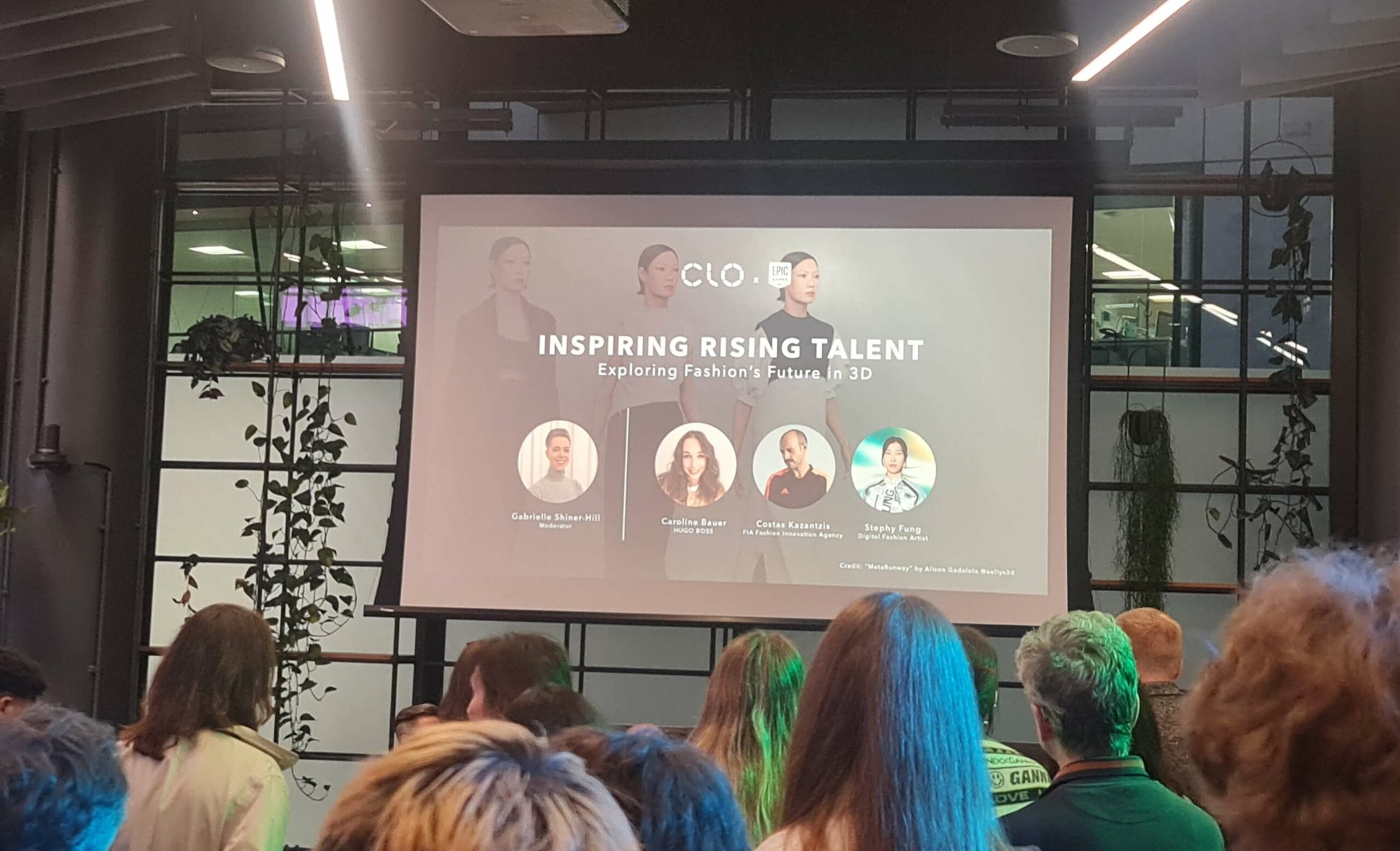
Last week, I had the opportunity to attend a fantastic industry event co-hosted by Epic Games and CLO Virtual Fashion (CLO3D). It brought together some of the most forward-thinking voices in digital fashion to explore how emerging technologies are transforming the way we create, teach, and engage with fashion in a 3D environment.
The day was a mix of panel discussions, live demonstrations, and informal networking—all focused on the future of fashion workflows and the tools that are helping us get there.
Event note: This article reflects the CLO x Epic Games event held in London in February 2025. I returned to another CLO x Epic event in 2026, where the conversation had moved further into AI, real-time workflows and the difference between visual output and technical evidence.
One of the most valuable parts of the event was a panel discussion exploring how 3D tools can be integrated more effectively across both industry and academia. The conversation touched on a number of practical topics, including:
It was encouraging to hear a shared commitment to making 3D more accessible, more practical, and more connected to real-world applications.
Related reading: I’ve explored this education and skills question in more depth in Is Fashion Education Keeping Pace with the Skills Industry Now Needs?, looking at how technical, digital and traditional fashion skills now need to work together.
Alongside the discussion, there were some brilliant demonstrations of how advanced tools are now integrating with CLO3D to offer smarter, faster, and more immersive design experiences.
We saw live demos from:
V Metics – demonstrating how virtual cosmetics and avatar personalisation can enhance storytelling and expression in digital fashion environments
The highlight for me was seeing CLO3D’s LiveSync with Unreal Engine in action. What interested me most was the potential to move 3D garments into real-time environments more fluidly, opening up possibilities for fashion presentation, digital showrooms and more immersive product experiences.
One year later: I returned to a CLO x Epic Games event in 2026, where the Unreal workflow had developed further and the conversation had shifted towards AI, evidence and practical implementation.
Read my 2026 CLO x Epic Games reflections
One of the most rewarding parts of the day was finally meeting people from the digital fashion community who I’ve connected with online but hadn’t had the chance to meet in person. These face-to-face conversations added a new level of connection and made the event feel both insightful and collaborative.
What stayed with me most was not one particular tool or demonstration, but the need to connect technology with the people and workflows that actually have to use it.
3D becomes much more valuable when it is embedded into product development, education and communication rather than treated as a standalone visual tool. That requires technical understanding, appropriate training and a clear idea of what the technology is there to improve.
Looking back at this event now, that feels even more relevant. The tools have continued to develop quickly, but the challenge is still making sure that adoption is practical, useful and grounded in real fashion workflows.



 Go Back