 Blog •
17/08/24
In the last year, I’ve been making more intentional steps toward understanding my own environmental impact, both personally and professionally. As someone already passionate about sustainability in fashion, I was looking for ways to align my business practices with my values and support my clients in doing the same. That’s where Net Zero Barnsley came in.
After seeing the programme advertisement land in my inbox, I signed up without hesitation. I already knew I wanted to reduce the footprint of Fashion Toolbox, but this gave me a structured way to assess, plan, and make meaningful changes, not just in how I work, but in how I support others working towards their own sustainability goals.
A note from 2026: This article was originally written in 2024, when I was at the beginning of looking more closely at Fashion Toolbox’s own environmental impact. I’ve kept it as a record of those first steps rather than rewriting the journey with hindsight. Sustainability is still something I approach as an ongoing process rather than a finished claim.
At Fashion Toolbox, I use software like CLO3D to help brands reduce reliance on physical sampling. The benefits of this are very real: fewer prototypes shipped across the globe, fewer fit samples in landfill, and more informed design decisions made earlier in the development process.
It’s not just about carbon reduction either. Digital design opens up opportunities for smarter collaboration, shorter timelines, and less waste, all of which align closely with what we’re aiming for when we talk about net zero in fashion.
Related reading: I’ve explored the relationship between 3D and sustainability in more depth in How 3D Fashion Technology Can Support Circular Design, including where digital product development can contribute and where its limitations need to be understood.
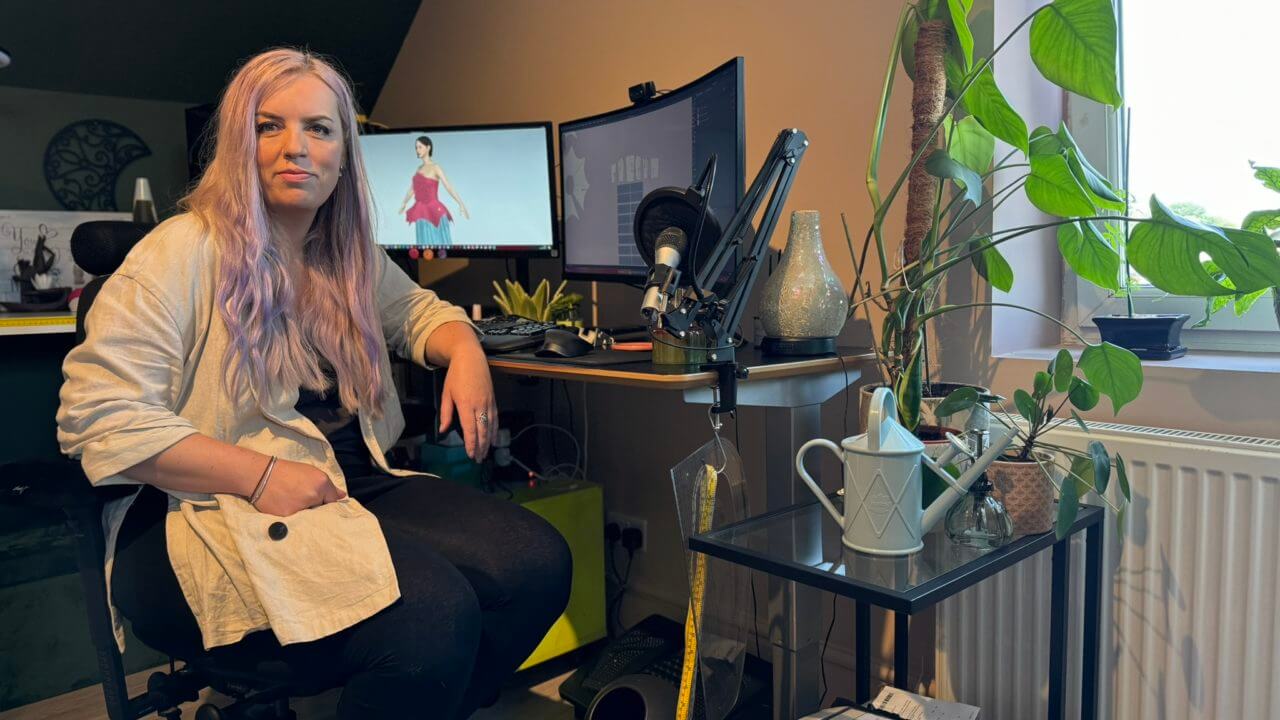
As part of Net Zero Barnsley, I’ve completed the baseline assessment and have started developing my innovation plan. I’ve already switched to LED lighting and reviewed my general energy usage at home (Fashion Toolbox is based from my home studio), but the next step is looking in more detail at the power consumption of my digital equipment and hardware.
I’m also working on digitising my pattern library, over 100 patterns, to reduce paper use and offer clients a more sustainable option when it comes to base blocks, e-commerce visuals, and direct-to-fabric printing. It’s a time-consuming task, but one that will add real long-term value both environmentally and commercially.
What has been most valuable about the programme is how it’s helping me support others. As a CLO3D trainer and consultant, I work closely with businesses looking to modernise and become more efficient. Learning about net zero in the context of supply chain emissions has given me a better understanding of how I can help clients integrate more sustainable practices, whether that’s through digital sampling, sourcing closer to home, or reducing waste in development.
I also had the chance to connect with local businesses through the Barnsley Business Village, which has opened up conversations about how CLO3D can help other designers, manufacturers, and small brands embrace more circular, resource-conscious ways of working.
While many of the other businesses on the programme were larger than mine, I found it incredibly valuable to learn alongside them. Hearing about their changes has helped me think about what’s possible on a smaller scale too. The support from the Net Zero Barnsley team has been fantastic.
I know that for many small businesses, the idea of “net zero” can feel intimidating or out of reach. But my experience has been that once you take the first step, everything starts to become more manageable. Having access to guidance, workshops, and practical advice makes a real difference.
I’m still early in my own net zero journey, but the benefits have already been clear, from better energy awareness to new business opportunities. I’d absolutely recommend that other small businesses take a look at what’s available through programmes like this. Not only does it help reduce impact, but it strengthens your offer and positions you ahead of the curve in an industry that’s changing fast.You can find out more about the NetZero programme, and read my story here.
Looking back, what was useful about starting this process was being forced to look at the business itself rather than only talking about the potential sustainability benefits of the services I provide.
Fashion Toolbox is a small, largely digital business, but that does not mean it has no environmental impact. Computers use energy, equipment has a lifecycle, travel has an impact and even digital workflows need to be questioned rather than automatically labelled sustainable.
For me, the value of starting this journey was not finding one perfect answer. It was becoming more aware of where the impacts sit, which changes are within my control and where I still need better information.
That is probably the part I would carry forward most strongly now: sustainability is something to keep measuring, questioning and improving rather than a box to tick.



 Go Back